
Titanium
Three cases · in development
- Case
- 3D printed titanium
- Movement
- Casio 3284 digital module
- Strap
- 20 mm

 Salmiac
Cast bronze / digital watch / 01
A digital watch built around a sculpted bronze case.
Bare bronze prototype · In development
01 / The whole watch
A Casio digital module tells the time inside the case. The current prototype shows the bronze bare, with a dark red leather strap.


The material
The raised parts wear first and come back to bare metal — bright where the mark is fresh, darkening again after that. The pattern that develops follows how the watch has been worn.

The patinated finish · in preparation
NH4Cl
Ammonium chloride. For the patinated models the case is coated in the salt, then sealed into a chamber and left to react. A crust of copper chloride minerals grows out of the bronze. How long it stays in decides the colour: the same salt gives green or blue.
Salmiac takes its name from this salt. It is also what gives salty liquorice its distinctive taste.
It occurs naturally at volcanic fumaroles, crystallising out of the gas as it meets the air. The patinated models are named after volcanoes.
In 1866, the same salt was used as the electrolyte in the Leclanché cell, an ancestor of the modern dry battery.
The construction
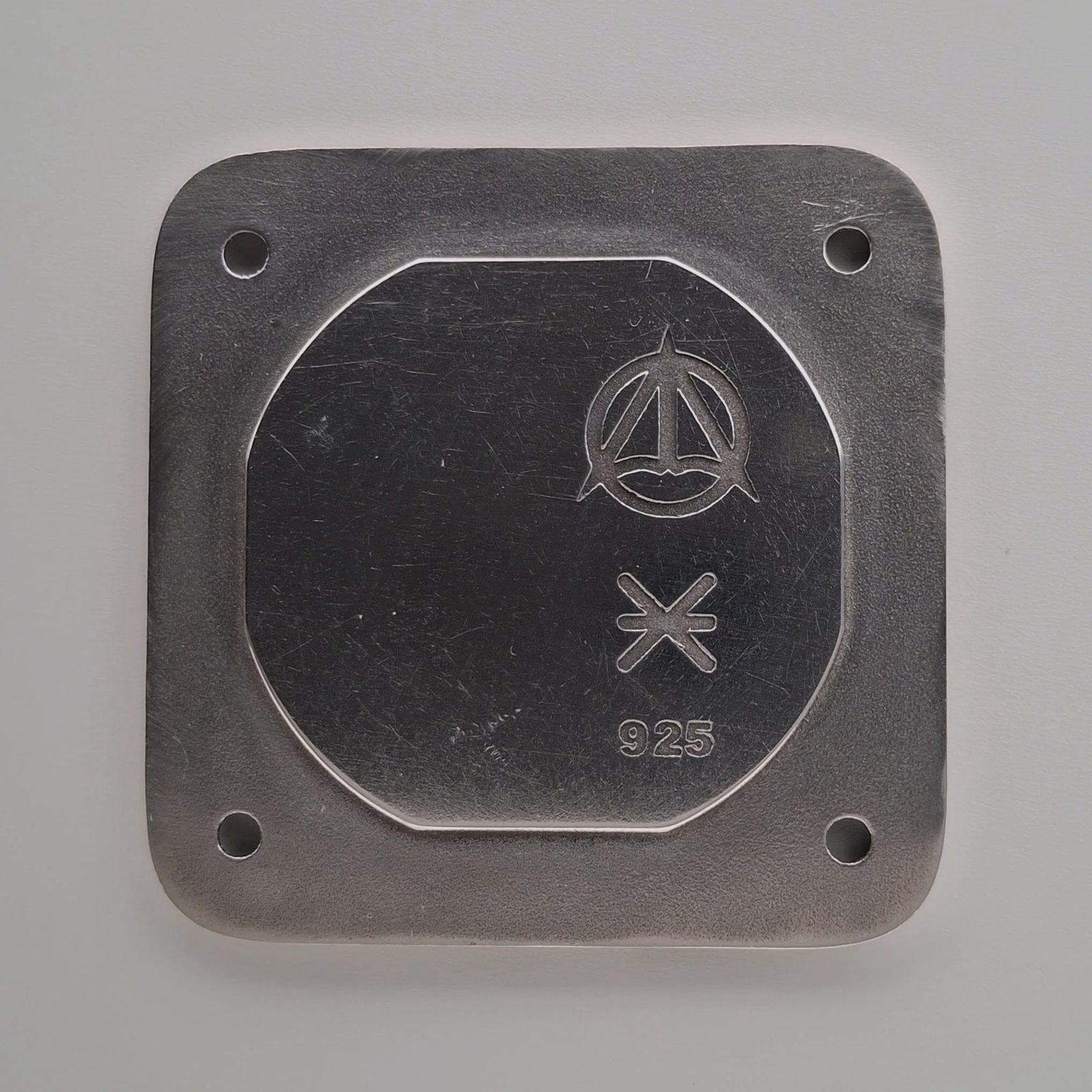
The case is closed on every side but the crystal. The back comes off with four screws. The module sits in a pocket in the bronze, enclosed by a rubber gasket where the back meets the case. The wave runs across the back as well, and the mark stands in a raised circle. The assay marks are struck on the inside.

Eight parts, drawn in the order they stack: crystal at the top, screws and the buckle at the bottom.

Drag to turn
The parts, and what each one measures.
The making
The bronze comes out of the mould with the sprue still on it. What follows is hand work: the sprue is sawn off, the face is filed flat, and the holes are tapped for the caseback screws.
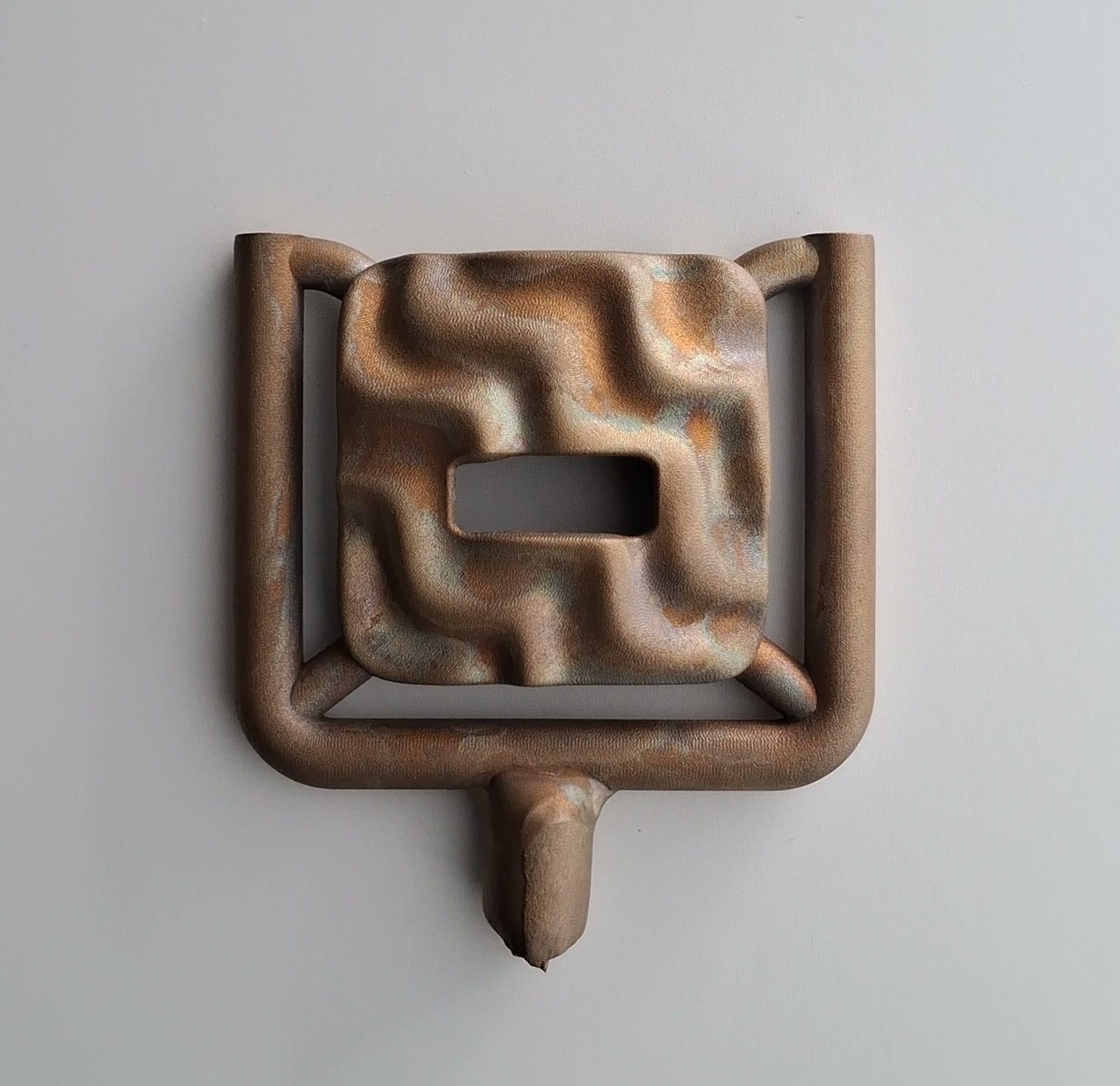
As cast · the case
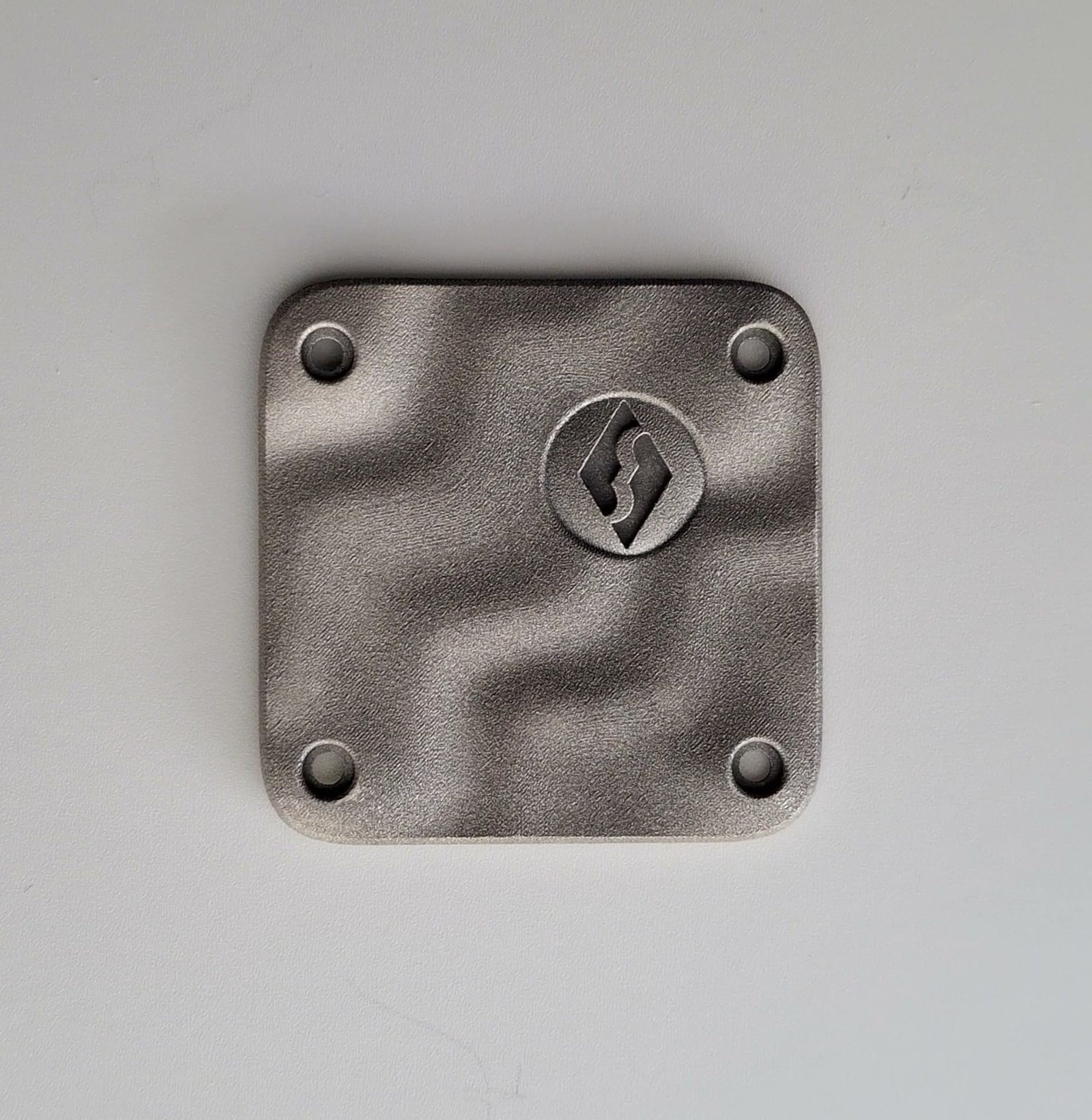
As cast · the caseback
01 · Sawing the sprue
02 · Filing
03 · Tapping the threads
The buckle
The buckle is cast as well. Its frame is sawn from the sprue, the tongue is bent from wire and cut to length, and the finished buckle is fitted to the strap.
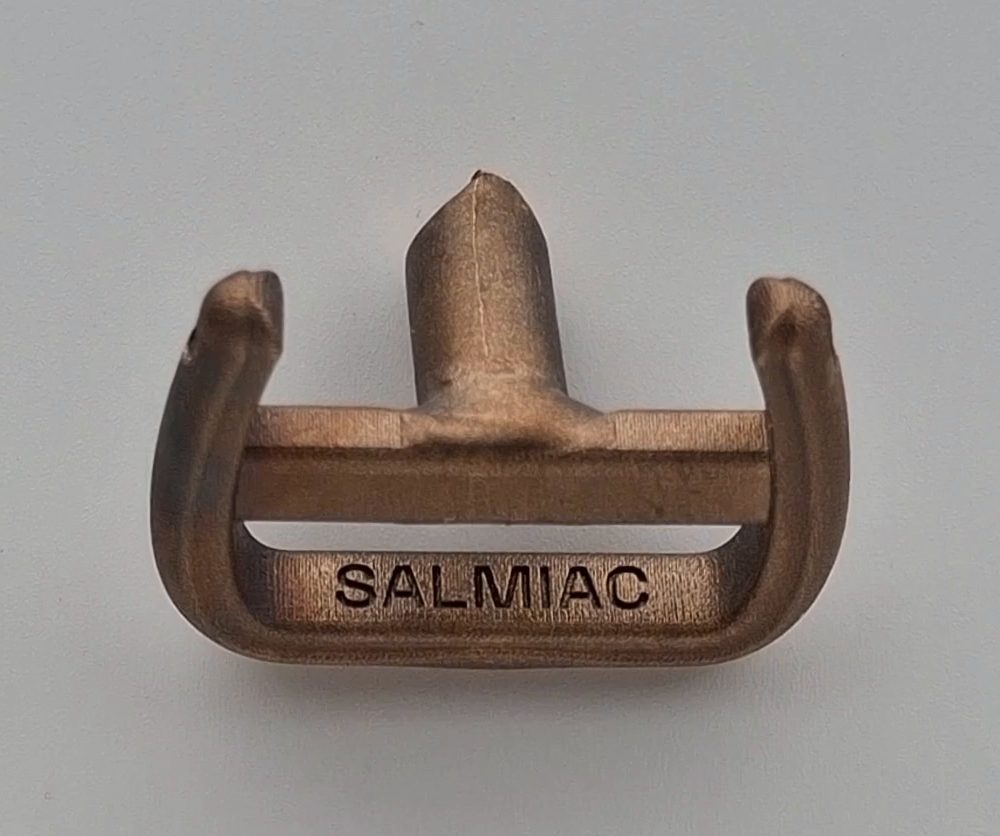
As cast · the buckle

Finished · on the strap
01 · Sawing the frame free
02 · Bending the tongue
03 · Cutting the tongue
04 · Fitting to the strap
About Salmiac
Salmiac is designed by Anton Leivo in Finland. His background is in product and jewellery design, with a degree from the Lahti Institute of Design and further studies in micromechanics.
For Askja, his work centres on the case: developing the form in 3D, taking it through physical prototypes and refining how its parts fit together.
Living with Askja
The current prototype is not water resistant. Keep it out of the shower and swimming pool, and wipe off splashes promptly.
Bare bronze darkens with use. A soft, dry cloth is the starting point for care; the prototype guide explains the bronze and silver surfaces.
The CR1616 battery is replaceable through the screwed caseback. The guide describes time setting and battery replacement for the current prototype.
For questions about use, care or servicing, write to Anton Leivo at anton@salmiac.fi.
Coming